Microsoft is changing the app development game with its Power Platform. The platform is an ever-growing part of the Microsoft ecosystem, where business users and developers alike are empowered to build apps and solutions— faster and cost-effectively. Interestingly, it is a low code/no-code alternative to make application development easily accessible, highly productive, and extensible for whatever solution you want to create.
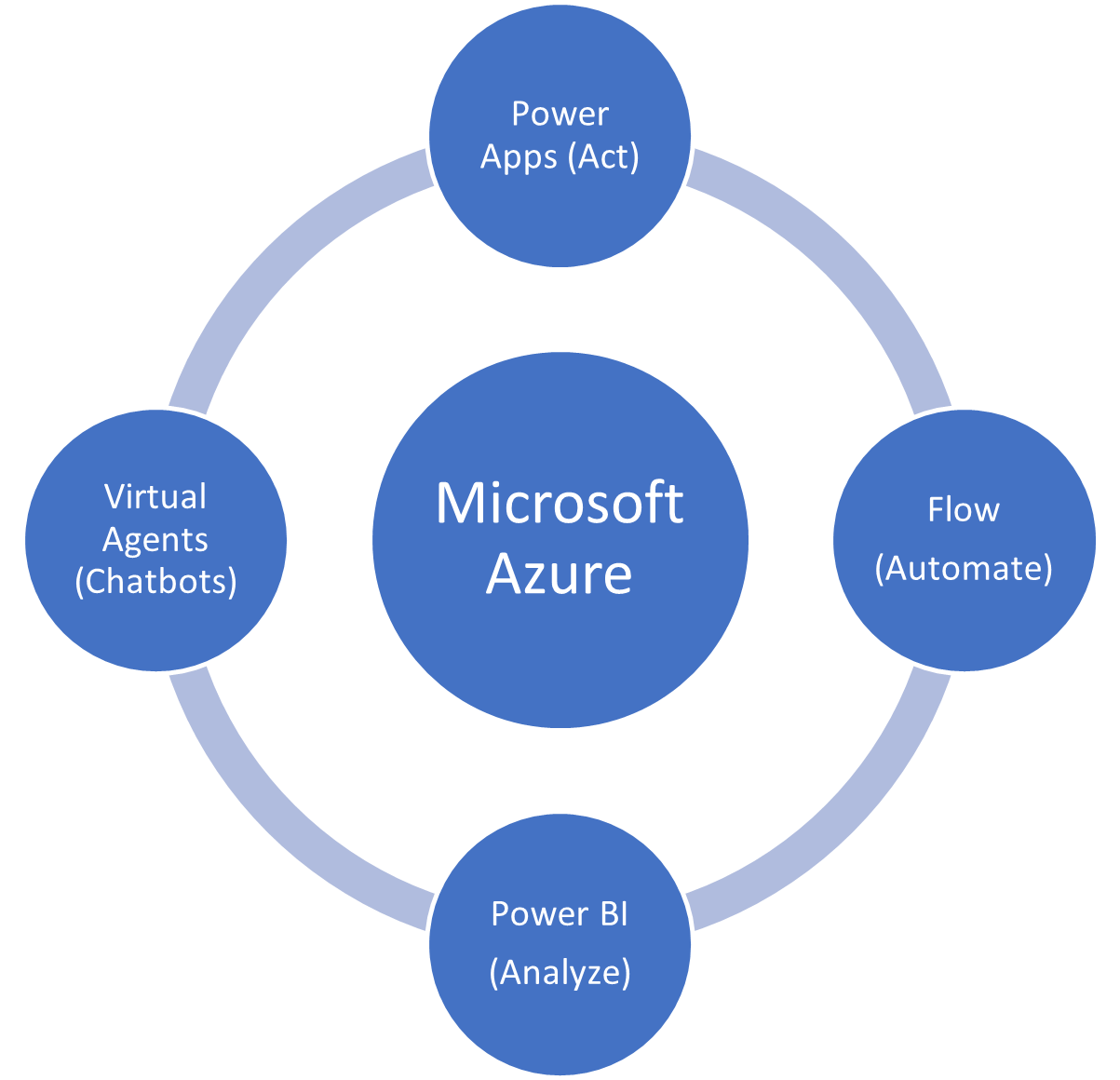
To be specific, Power Platform consists of Power Automate, Power Apps, Power BI, and Power Virtual Agents that enable users to perform key actions on data: Analyze, Act, Automate, and Build Chatbots. All these components work together atop your data to help everyone across the organization drive business results.
This low code development platform is driven by the cloud-based environment: Microsoft Azure. You just have to configure an environment under your tenant and assign users/licenses to start building flows and apps. You can create workflows and applications, but none of that matters unless it integrates seamlessly with your data.
 So, is it a promising land for non-developers?
Low-code development is becoming increasingly popular amongst individuals and enterprises to create and automate the process for higher productivity. According to Gartner Inc, the low-code development software market will grow nearly 23% this year, to $13.8 billion, before rising to $17 billion in 2022. The functional capability of low code development with Microsoft Power Platform is working in the same direction to make coding easier. In fact, it is a tool that everyone on the IT spectrum can draw benefits from:
- Speed: Create new apps quickly without too much technical intervention.
- Simplicity: Low-code tools are designed to be simpler and easier to use.
- Innovation: Try a new idea by just clicking instead of drafting massive line of code and budget requests.
- Empowerment: Empower everyone across the enterprise from front-workers to CEO of the company.
- Community: Leverage, a community of millions, to drive transformational change for your business needs.
Recently, Microsoft has introduced another programming language called Power Fx to further strengthen enterprises’ critical low-code needs.
The flip side of low code development
Apps with a few clicks are always enticing for organizations. But many enterprises wonder: is turning to low-code development going to be fruitful for them in the long-run? Do the advantages low-code/no-code platform offer be worth the costs and…most importantly time?
With a Low-code platform, perhaps you can save lots of money and time, but does it come with complete stability? This can be a tricky situation for enterprise-class applications. Moreover, your code will be relatively standard as others; thus, it can be challenging to build bespoke processes.
Microsoft though understands these shortcomings. That is why, its recent improvements to Power Apps for leveraging JavaScript or TypeScript or a component library such as React is a step in the direction of empowering the hard-core developers to make the best use of Power Platform. Support like Service Principal authentication, quality checks, and environment management are also being addressed in the platform. Moreover, your capability of deploying code to GitHub (Microsoft now owns GitHub) helps to document, control, and refine reference solutions and reusable components.
The recent introduction of Power Fx, Microsoft Excel-based language, will also involve people in the process of problem-solving. This will allow business users and professional developers to collaborate to bring exciting solutions to the market.
To be frank, low-code platforms are restricted in terms of advanced features and functionalities. Thus, if you are planning to build enterprise-level applications, you must take care of the following factors:
Design Better: Eliminate design mistakes to mitigate performance problems, high costs, or bad user experiences for the intended user-base.
Ensure Governance: Follow development best practices to reduce broken apps, significant rework, or security issues that can impact the performance of the whole solution.
Minimize Data Complexity: You must have to connect years of legacy data with your external sources. Make sure to set up proper access and authorization to various data levels – based on role and confidentiality classification – to prevent any kinds of unfortunate scenario.
Customize Connectors: Creating more complex features require a fair amount of customization/code. Take expert’s help to build custom connectors and seamlessly push these custom connectors to dedicated Power Platform environments.
Foster Extendibility: Ensure that you can extend applications using custom coding because the current offers come with just 400 pre-built actions. It would be best if you built custom controls and connectors that everyone can use.
Reduce Dependency: Ensure that you do not have to depend on the vendor’s mercy if you start bumping into small glitches, bugs, or inconsistencies.
Final Thoughts
Whether we build a low-code platform or full-fledged coded platform, stringent application governance, access, authority, and security up-front must be addressed to get desired business results. It’s not easy to create a balance between “low-code” flexibility and “need to be coded” to bring more business values. This new way of working is nothing short of new challenges. When your application or solution interacts with multiple systems in real-time, you cannot uphold credibility and stability without writing advanced client or server-side logic.
Experts say, low-code/no-code is not going to replace professional developers anytime soon. Even so, don’t expect low-code to replace traditional programming methods anytime soon, said Amit Zavery of Google Cloud.
 WePlus Consultancy
Wonderful